Seadog Waters Ports 25hp 2 Stroke Outboard Reviews
With the advent of solid-state ignition, fuel injection, and a host of other technologies, today'south ii- and four-stroke outboards are more than reliable than they've ever been. They're so dependable, in fact, that we often take their reliability for granted. Yet, there are others of united states out there that take older, more temperamental outboards and, believe information technology or not, fifty-fifty relatively new outboards can deed up at times. It's related to Murphy's Law of Boats.
So, what should you do when your outboard engine is puttering instead of purring? Luckily there are some common reasons outboard engines human action up, and well-nigh of the solutions don't involve getting an expensive mechanic involved. Some problems can even be solved with the twist of only two fingers. Read on to notice out virtually some steps to take when your outboard'southward got an attitude problem.
Check the Tank Vent and Hoses
If we had a dollar for every time our boats started sputtering and running rough because we forgot to open the fuel vent on our portable fuel tanks, well, we'd accept quite a few bucks rolling effectually. If you've got a portable tank and your engine is misbehaving, the first matter yous want to do is check to make certain the valve on your portable tank is fully open. If it isn't, information technology will cause your engine to become fuel starved, run crude, and eventually stall. Just twist information technology open and monitor your engine for comeback.
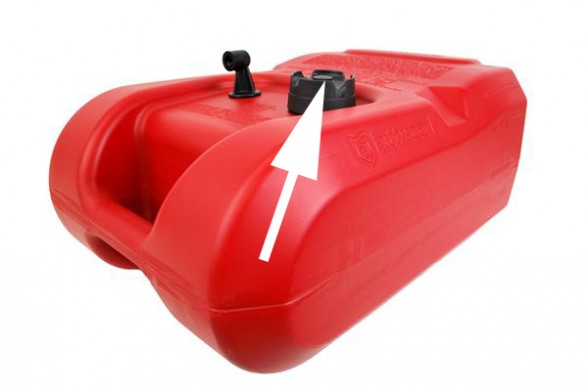
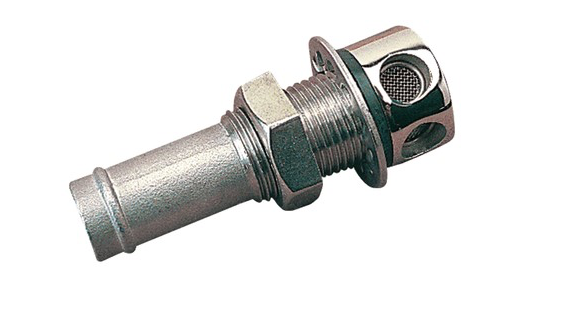
If your boat doesn't have a portable tank, but instead an integral tank with a fuel vent that'southward plumbed to the outside of the gunkhole, audit that vent. Wasps, spiders, and other critters are well-known for bottleneck these fittings up, and that can significantly affect engine performance. If you do find a clogged vent, simply clean it out with a pair of tweezers. If you've got a mud wasp nest yous'll desire to zap the wasp with wasp and bee killer kickoff, and then clean out the muddy residue, trying not to get any downwardly the fuel vent hose.
Also, bank check all your fuel hoses from the tank to the engine. A kinked or pinched hose can cause meaning functioning problems in an outboard engine, especially at higher RPMs, while pinholes in fuel lines tin can innovate air to the fuel, as well as create a safety problem.
Bank check the Fuel Connector
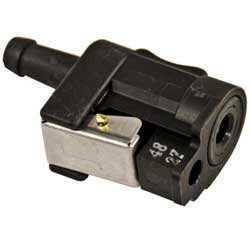
Another trouble spot in the fuel delivery department—if yous've got a portable tank setup—are the snap-in connectors that adhere the fuel line to your outboard. A haven for corrosion, the ports inside these connectors often clog upwards with nasty bits of corroded, gas-soaked metal powder that tin impede fuel flow. The ball bearings and check valves inside some of these connectors tin can as well fail.
If your outboard is running rough but you've checked your fuel vent and information technology's clear, disconnect the fuel line and give the outboard end of the connector a good exam. If it appears OK inside only the outside is corroded and worn, consider replacing information technology with a new ane; at that place may exist a blockage or failure you tin't meet inside it. Once you lot've replaced or unblocked the connector, reinstall information technology and check the engine for any improvement in the way it runs.
Check the Fuel Filter/H2o Separator
Though many smaller boats using portable tanks are not equipped with these fuel filter/water separator devices, about boats with outboards that draw fuel from an internal fuel tank are. The purpose of these filters is not only to filter particulate matter out of fuel before it reaches your outboard, just too to separate any water that may be present in your fuel. These filters sometimes become chock-full or filled with water, causing an engine to run poorly.
The first thing you lot'll want to do is take a look at the clear sight basin at the bottom of the filter, if this is the type of filter you have—some fuel filter/water separators are enclosed in a single unit with no sight glass. Place a rag, pan, or other receptacle beneath information technology and unscrew the drain plug to let out any water that's in the bowl until only gasoline is trickling out. The presence of h2o is a tipoff that y'all may have a bad load of fuel in your boat. You may desire to accept information technology professionally filtered, equally the presence of likewise much water can cause engine problems.
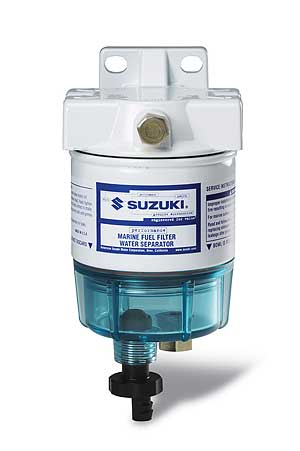
Unless you've had it recently serviced or changed it yourself, information technology'due south not a bad idea to change out the filter element in the fuel filter/h2o separator assembly at this point, following the manufacturer's instructions for doing and so. Information technology's of import to annotation that once you remove this filter you can't examine it and reinstall information technology. Luckily well-nigh are a relatively inexpensive purchase.
Some portable outboard fuel tanks have inline primary fuel filters installed in the fuel supply line, besides. If you can't remember the last fourth dimension yous changed it, you probably should go ahead and supplant it. Last, e'er employ fresh fuel. If the gasoline in your tanks has been sitting for more than eight to 12 months, it's probable fairly dried. And, always add fuel stabilizers designed to combat problems associated with ethanol fuel at every fill up. No excuses.
Cheque/Replace Secondary Fuel Filters
Many outboards—peculiarly newer models—take a slew of onboard fuel filters that can become clogged and detrimentally touch on performance. On the simplest of outboard engines these are easily replaceable, often installed inline between the fuel inlet and the carburetor. Some smaller or older outboards may not fifty-fifty take one. Newer, fuel-injected outboards tin take as many as 12 of these filters—two or iii primaries and one or more than for each fuel injector.
It's only the primary onboard fuel filters that are owner-serviceable on virtually modern outboards—especially larger four-strokes—and even those normally crave a proprietary tool to remove them. Other fuel filters, such equally those aforementioned fuel injector units, and vapor separator tank filters, should exist changed by the pros. Long story short, if yous can't think the last fourth dimension the fuel filters were serviced on your gunkhole and yous have an engine that's not running and then well, now's a skillful time to get a fresh fix installed; it could significantly improve operation.
Check/Supplant Air Filter
Smaller/older model outboard engines are usually not fitted with an intake air filter of any sort, but plenty of newer four- and two-stroke outboard engines take them. If they get clogged with dust and dirt, this tin bear on engine performance significantly by starving the engine of air.
This is generally an owner-serviceable function swap, and many outboard engine owner's manuals describe how to change them. One time you've located the filter, give information technology a thorough inspection. If it looks muddied, or yous tin't remember the concluding fourth dimension it was changed, it's generally an inexpensive part to bandy out for a new one.
Check Spark Plugs/Ignition
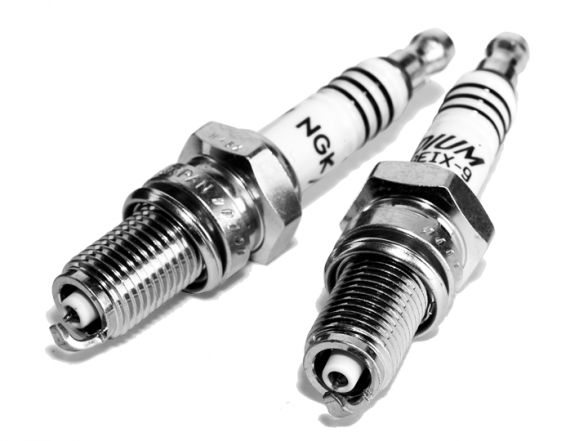
Fouled or damaged spark plugs tin cause all sorts of problems in any engine, much less in an outboard. Their condition can also betoken lurking internal problems, as well. If you've eliminated fuel bug and air problems, consider pulling each spark plug and giving it a thorough inspection.
Plug electrodes—the ends that sit in the engine—that are worn, appear burned, or take dingy or oily deposits should be replaced with properly gapped plugs. Concord on to your old plug(s) if they were fouled with oil or fuel gum and and then have an outboard mechanic take a expect to diagnose the possibility of more serious issues inside your engine.
If you're an unlucky soul with an older outboard that has ignition coil, distributor, rotors, spark plug wires, etc., you'll need to bank check all those components, as well as timing problems that could crusade your engine to run poorly. The expert news is that in that location are many tutorials online for diagnosing and repairing ignition system components in older outboards yourself, versus taking the engine into a shop for repairs.
Check/Clean Carburetor
While carburetors are apace condign a affair of the past in outboard engines—cheers to direct injection—at that place are still plenty out in that location. They're awfully decumbent to getting gummed up with fuel varnish and other contaminants, which tin cause your outboard to run poorly.
The get-go and easiest thing to do is to spray carburetor cleaner in your carburetor. Y'all may just get lucky and this solution volition knock away any gum, varnish, or debris that'southward causing your problems. By and large, nonetheless, getting all the gunk out of a carburetor involves removing information technology, cleaning the jets, checking the seals, and and then rebuilding information technology. At that place are kits your engine store can sell you that often include these and other components needed for a rebuild. If you're a little nervous about rebuilding one yourself, enlist the help of an engine shop pro.
Nosotros're going to hope, at this point, that your engine is humming along, providing great operation for your boat. If yous're unlucky and your engine is even so running poorly after you've systematically checked all the components mentioned in a higher place, so it'south time to get a mechanical guru from your local engine shop/dealer involved.
An inefficient boat engine may well exist a source of pollution. For more information check out our eco friendly boating guide. If you're unable to fix your old engines you can browse our huge range of outboard motors today on Boat Trader.
Happy motoring!
Editor's Note: This article was originally published in January 2017 and was last updated in May 2021.
Source: https://www.boattrader.com/resources/troubleshooting-rough-running-outboard/
0 Response to "Seadog Waters Ports 25hp 2 Stroke Outboard Reviews"
Post a Comment